Adaptive Engineering Pvt. Ltd.
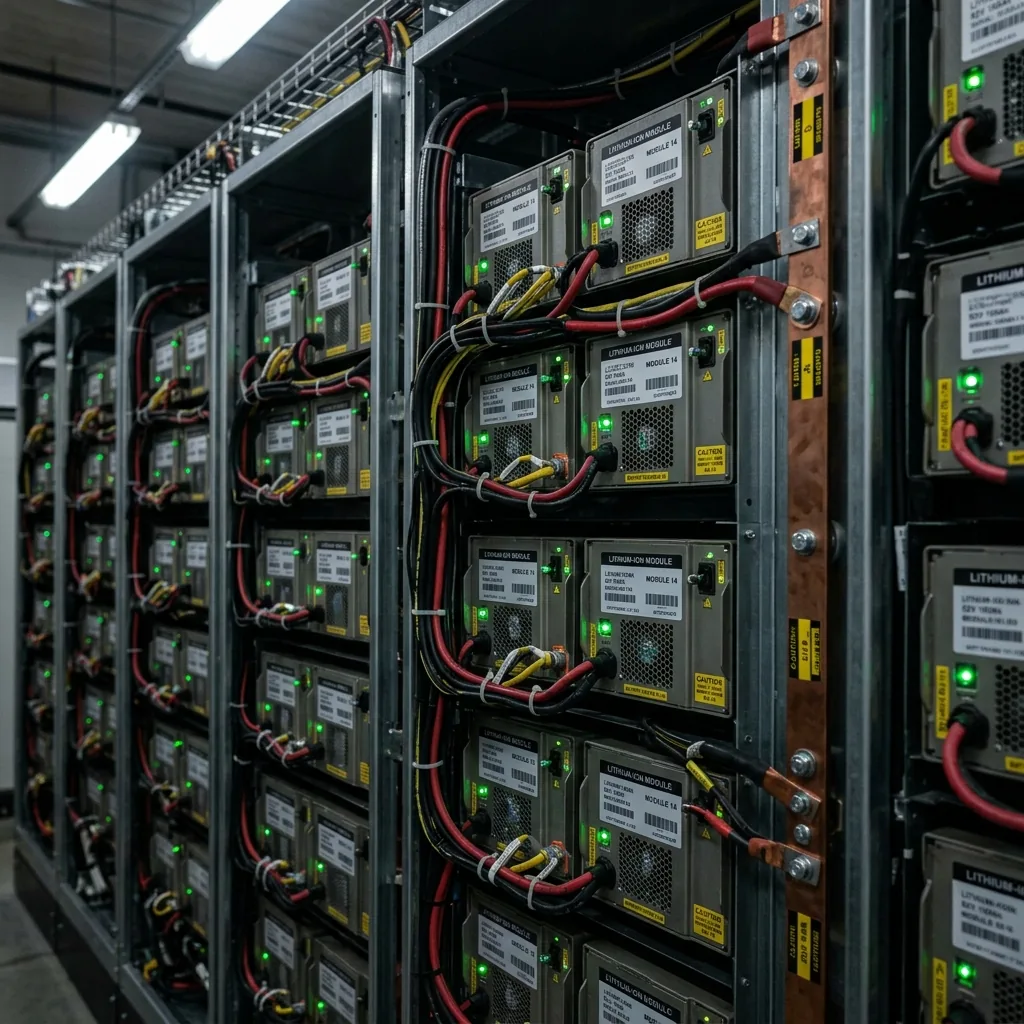
Utility-scale solar, wind, and hybrid plants increasingly pair with Battery Energy Storage Systems (BESS), but a battery alone doesn't generate revenue. It's the Energy Management System (EMS) that turns stored energy into a dispatchable, contract-compliant asset. An EMS is the single decision-making layer that coordinates battery racks, PCS/inverters, BMS controllers, transformers, protection relays, and the plant SCADA/PPC to work as one system.
Why EMS Engineering Matters for BESS Performance
A poorly engineered EMS creates hidden risk that surfaces at the worst possible moments – during a frequency event, a State of Charge (SOC) boundary condition, or a future capacity expansion. The core issue isn't the technology itself, but inconsistency: when every project is built from scratch, each plant ends up with unique tag names, dispatch logic, SOC-management rules, and alarm behaviour, leading to longer engineering cycles, error-prone commissioning, and steep operator learning curves.
A capable EMS partner prevents this by combining standardised, field-tested control logic with commissioning discipline; the result is a BESS that dispatches exactly as specified, cycle after cycle.
Core Components of a Standardised EMS
AEPL's standardised approach is built on a governed, reusable engineering library covering dispatch function blocks, SOC-management logic, faceplates, alarms, trends, navigation, and communication templates. Rather than improvising each project, engineers assemble every BESS EMS from proven, pre-validated building blocks – the same "develop once, reuse everywhere" principle that underpins the modular engineering concept.
Key EMS Capabilities That Drive Business Outcomes
Real-time fleet visibility: a unified dashboard brings live SOC, dispatch status, alarms, and grid signals into a single view, enabling drill-down from whole-plant to a single rack in seconds.
Performance intelligence: continuous tracking of Round-Trip Efficiency, State of Health, SOC-boundary compliance, and dispatch accuracy versus instruction, benchmarked against the contracted duty cycle.
Granular device monitoring: rack-level heatmaps and module/cell-group monitoring expose underperformance that portfolio-level averages hide, protecting long-term capacity and warranty claims.
Alarm and event management: prioritised, time-stamped alarms compress fault-to-fix time and reduce alarm fatigue.
Grid-context dispatch accuracy: live grid frequency, dispatch instructions, and ambient/cell temperature feed directly into performance calculations, so KPIs are judged fairly against what the plant was actually instructed to do.
Business Impact of a Well-Engineered EMS
Standardisation converts directly into measurable value across engineering, operations, maintenance, and business outcomes – including faster EMS development, reduced downtime, easier O&M, and lower lifecycle cost. On the commercial side, a capable EMS platform recovers dispatch that would otherwise be silently lost, protects availability-linked payments and PPA guarantees, and lowers operating cost through automated reporting and targeted maintenance.
Frequently Asked Questions
What does an EMS do for a BESS?
It acts as the decision-making layer that coordinates battery racks, PCS, BMS, and grid interfaces to keep the plant dispatching safely, compliantly, and predictably.
Why does EMS standardisation matter?
It removes the inconsistency of building every project from scratch, resulting in faster commissioning, fewer errors, and easier long-term maintenance.
How does an EMS protect BESS revenue?
By detecting SOC or setpoint deviations the moment they occur, rather than at month-end – recovering dispatch that would otherwise be lost silently.