Adaptive Engineering Pvt. Ltd.

Battery Energy Storage Systems (BESS) are becoming more than backup or energy-shifting assets. With the right operational strategy, they can participate in multiple value streams, including energy arbitrage, ancillary services, capacity support, and grid flexibility.
But storing energy is only part of the equation. The real value comes from knowing when to charge, when to discharge, how the battery is performing, and whether it is delivering what the grid requires.
This is where an Energy Management System (EMS) becomes critical.
From Battery Storage to Revenue
Energy storage can create value through applications such as energy arbitrage, capacity support, and ancillary services. According to the International Energy Agency (IEA), battery storage is increasingly being used to provide flexibility and fast-response services to power systems.
An EMS helps operators capture this value by bringing battery data, grid signals, dispatch instructions, and equipment performance into a single operational view.
1. Improve Dispatch Accuracy
A battery generates value when it delivers energy when required.
An EMS continuously monitors instructed versus delivered energy, SOC, availability, and dispatch performance. This allows operators to identify deviations quickly and take corrective action before missed performance turns into lost revenue.
AEPL EMS provides continuous performance monitoring to help identify dispatch deviations and protect the revenue associated with battery availability and performance.
2. Monitor What Actually Drives Performance
Battery throughput alone does not indicate whether an asset is performing efficiently.
Key metrics such as Round-Trip Efficiency, State of Health, SOC compliance, availability, and degradation provide a clearer picture of the battery's actual condition.
With this information, operators can identify performance losses early and make better maintenance and operational decisions.
3. Reduce Downtime
Every minute of unnecessary downtime can mean missed dispatch opportunities.
An EMS helps reduce this risk through intelligent alarm and event management. Critical faults can be prioritised based on severity and business impact, while time-stamped event histories help teams identify recurring problems.
This enables O&M teams to move from reactive troubleshooting towards faster and more targeted action.
4. See Problems Beyond the Plant Average
A battery plant may appear healthy at an overall level while individual racks or modules are underperforming.
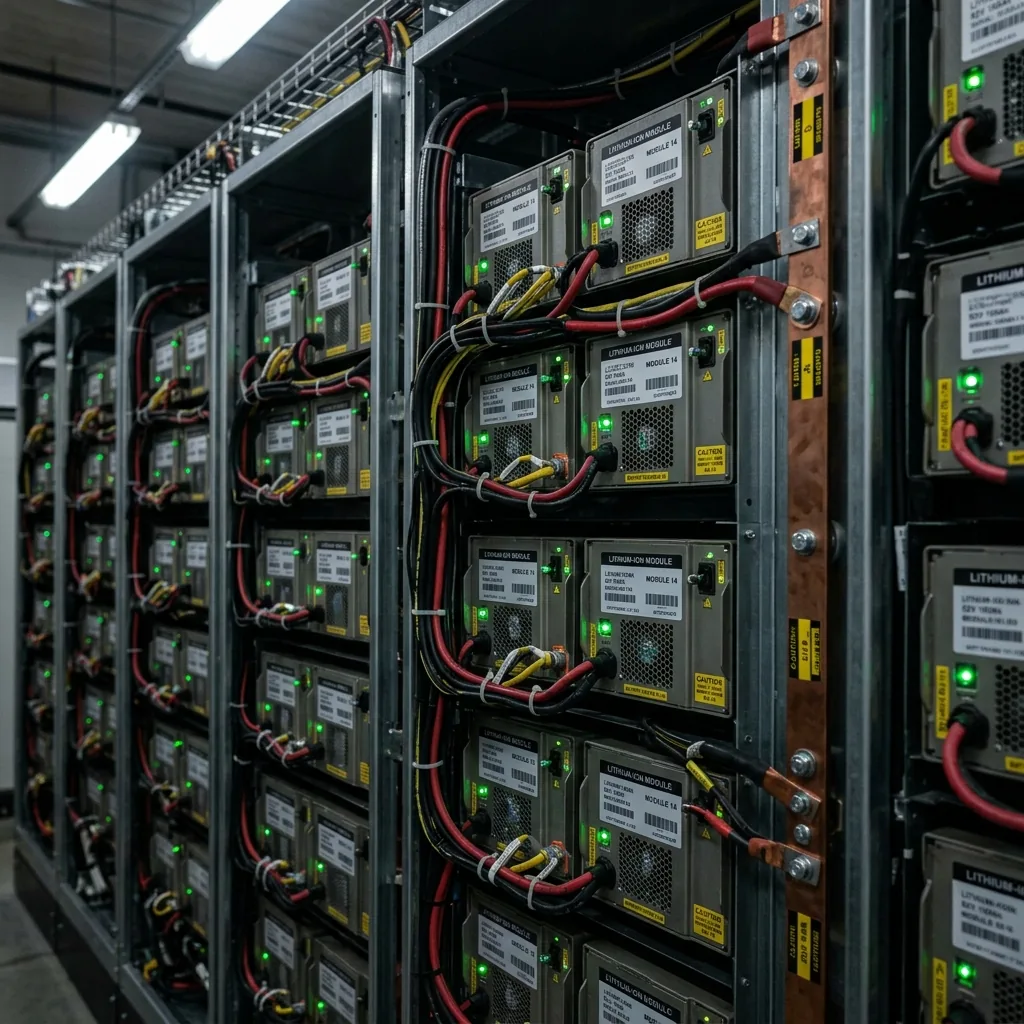
Granular monitoring provides visibility down to rack, module, and cell-group levels, helping identify imbalance, thermal drift, capacity fade, and other issues that may remain hidden in plant-level averages.
AEPL EMS provides rack heatmaps, BMS and PCS status, and device-level diagnostics to support targeted maintenance and protect long-term asset value.
Why EMS Matters for the Business
Battery storage can generate value from multiple services, but performance must be continuously managed to capture that value effectively. NREL research highlights energy arbitrage and ancillary services among the potential value streams for energy storage.
An intelligent EMS helps connect these opportunities with day-to-day plant operations.
Better visibility can mean:
Faster fault detection → Higher availability → Better dispatch performance → Reduced losses → Stronger asset economics
Turning Every Kilowatt-Hour into Measurable Value
The business case for an EMS is not simply about having another monitoring dashboard. It is about making battery performance visible, measurable, and actionable.
AEPL EMS brings fleet-level visibility down to individual racks and devices while providing performance analytics, alarm management, electrical-system visibility, grid-aware operations, and automated reporting.
For battery owners and operators, this means moving from:
"How much energy did the battery store?"
to:
"How much value did the battery actually deliver?"
References
- National Renewable Energy Laboratory (NREL) – Battery Storage Unlocked: Lessons Learned from Emerging Economies
- National Renewable Energy Laboratory (NREL) – Practical Operations of Energy Storage Providing Ancillary Services
- International Energy Agency (IEA) – Battery storage is scaling up and taking on a larger system role